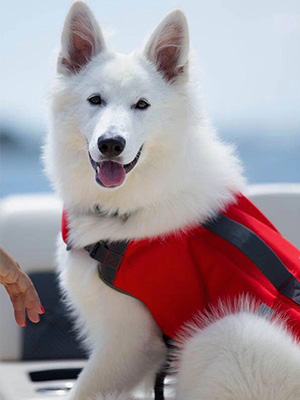
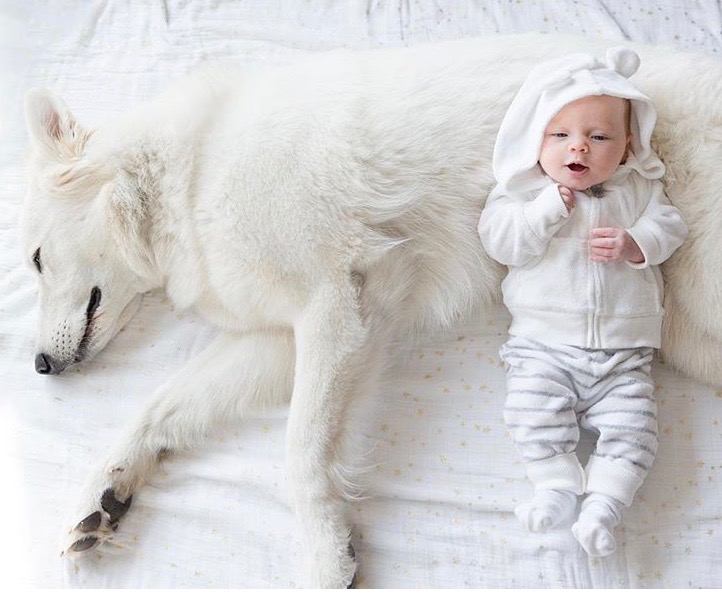
The White Swiss Shepherd, known in Europe as the Berger Blanc Suisse, has become one of the most sought-after breeds for service dog work, and at Dances with Wolves Ranch, we have been focused on this for nearly two decades.
Our dogs are not simply beautiful. They are working animals with an extraordinary combination of intelligence, sensitivity, and physical capability that makes them uniquely suited for service work. Families, trainers, and disability service organizations across the United States and beyond have chosen DWWR dogs specifically because of what these animals can do.
DWWR is a listed breeder with the American White Shepherd Association (AWSA) and the United White Shepherd Club, and all of our dogs are registered with either or both the FCI (Fédération Cynologique Internationale, the international European registry) and the UKC (United Kennel Club in the United States). References from families who have placed our dogs in service and therapy roles are available upon request.
Why White Swiss Shepherds Excel as Service Dogs
Not every dog, and not every White Swiss Shepherd, is suited for service work. Breed alone is not enough. What matters is the combination of genetics, early socialization, and careful selection.
Our breeding program was built from the ground up with service and therapy work in mind. With a background in biology, genetics, and animal behavior from UCLA, I evaluate each dog for the traits that actually matter in a working partner:
High trainability: These dogs absorb new tasks quickly and retain them reliably. They are ranked among the most trainable herding breeds in the world.
Emotional attunement: White Swiss Shepherds are highly attuned to human emotions. They notice distress, changes in breathing, changes in body chemistry, shifts in posture — making them naturally suited to psychiatric and medical alert work.
Gentle temperament: Unlike many working breeds, the BBS does not carry an edge. Their disposition is calm, social, and warm, which is essential for a service dog that needs to move comfortably with its owner in public spaces like hospitals, planes, and schools.
Appropriate size: At 55–90 lbs, large enough for mobility assistance, yet agile enough for indoor and public settings.
Types of Service Work Our Dogs Perform
DWWR White Swiss Shepherds currently work in a wide range of service capacities:
Psychiatric Service Dogs (PSD)
Their deep sensitivity to human emotional state makes them exceptional partners for individuals living with PTSD, anxiety disorders, depression, and other psychiatric conditions. They provide grounding, interruption of harmful behaviors, deep pressure therapy, and companionship that stabilizes daily life.
Medical Alert Dogs
With appropriate training, White Swiss Shepherds can alert to seizures, low blood sugar, and other medical events. Their calm under pressure and strong focus make them reliable in these high-stakes roles.
Mobility Assistance Dogs
Properly tested and conditioned dogs from our program have supported individuals with mobility challenges through brace work, retrieval, door opening, and physical stability.
Autism Support Dogs
Their gentle nature and non-threatening appearance: the pure white coat, the soft expression, make DWWR dogs a frequent choice for families supporting children on the autism spectrum.
How DWWR Prepares Service Dog Prospects
Service dog suitability begins at birth. Our puppies are born in a home, not in a kennel or barn, and are exposed to household sounds and varied stimuli from their very first days.
From birth through 16 days, our puppies undergo Early Neurological Stimulation (ENS): a structured protocol developed for military working dog programs that activates the neurological system during a critical developmental window. ENS exercises include mild thermal and positional stimulation that builds stress resilience, strengthen the immune response, and enhances cardiovascular performance. DWWR is one of the few breeders in the country applying this protocol consistently to every litter.
At seven weeks, we conduct formal temperament and disposition testing on every puppy, modeled on the Volhard Puppy Aptitude Test, evaluating confidence, trainability, energy level, touch sensitivity, and social drives. This allows us to match each puppy to the family or role for which they are best suited. Puppies identified as strong service or therapy candidates are matched accordingly.
We work closely with service dog trainers and disability organizations. If you are seeking a service dog prospect, we encourage early conversation to prioritize a temperament-matched placement.
Frequently Asked Questions
Are White Swiss Shepherds good service dogs?
Yes. The White Swiss Shepherd is widely regarded as one of the most capable service dog breeds available. Their combination of high intelligence, emotional sensitivity, physical capability, and gentle temperament makes them exceptional working partners across psychiatric, medical alert, mobility, and autism support roles.
Do DWWR dogs come trained as service dogs?
We produce and match service dog prospects: puppies with the genetics, socialization, and temperament foundation for service work. The owner and a professional service dog trainer typically complete full task training. We are happy to coordinate with your trainer from the start.
Can I speak with families who have DWWR service or therapy dogs?
Yes. We have placed many dogs in service and therapy homes over nearly 20 years, and owner references are available upon request. We are proud of what these dogs do in the world.
Can a White Swiss Shepherd be a service dog for a child?
Absolutely. Many of our dogs work alongside children with autism, anxiety, and other needs. Their gentle, intuitive nature and non-threatening appearance make them a natural fit.
Ready to discuss a service dog placement? Contact us or apply for a puppy and let us know about your specific needs. We will do our best to match you with the right dog.