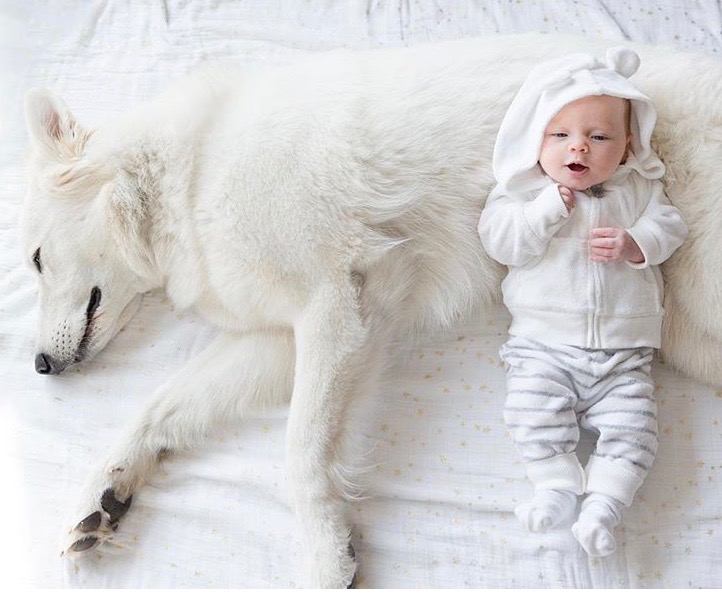
Bringing home a White Swiss Shepherd puppy is one of the most exciting and important commitments a dog lover can make. Understanding what your puppy has already been through before they arrive, and what they need from you in the months that follow, makes an enormous difference in who they become as an adult.
Here is a complete overview of BBS puppy development, along with what we do at every stage at DWWR.
Birth to 16 Days: Early Neurological Stimulation (ENS)
Our puppies are born in a home, not in a kennel or a barn. This is a deliberate choice. The sounds, smells, and ambient activity of a household begin shaping a puppy’s nervous system from the very first days of life.
From birth through 16 days of age, every puppy undergoes Early Neurological Stimulation (ENS), a structured protocol originally developed for US military working dog programs. ENS involves five brief exercises performed daily during this developmental window:
Tactile stimulation: gentle stimulation between the toes
Head-held erect: briefly holding the puppy in an upright position
Head-pointed down: briefly holding the puppy with the head angled down
Supine position: holding the puppy on its back for a few seconds
Thermal stimulation: placing the puppy on a cool, damp towel for a brief period
These exercises activate the neurological and adrenal systems during a window when they are uniquely receptive. Research and decades of breeder experience confirm that ENS-stimulated puppies show stronger cardiovascular performance, stronger adrenal glands, more resistance to disease, greater tolerance to stress, and greater eagerness to explore. The result is a puppy who is calmer, more confident, and more adaptable from the very beginning.
3–7 Weeks: The Socialization Window Opens
This is among the most important periods in a dog’s life. The brain is extraordinarily plastic, fear responses are not yet fully formed, and every positive experience during this window becomes foundational.
At DWWR, puppies during this stage are:
Introduced to a wide variety of sounds (household appliances, music, outdoor sounds)
Exposed to different surfaces (grass, tile, carpet, gravel, stairs)
Handled extensively by different people
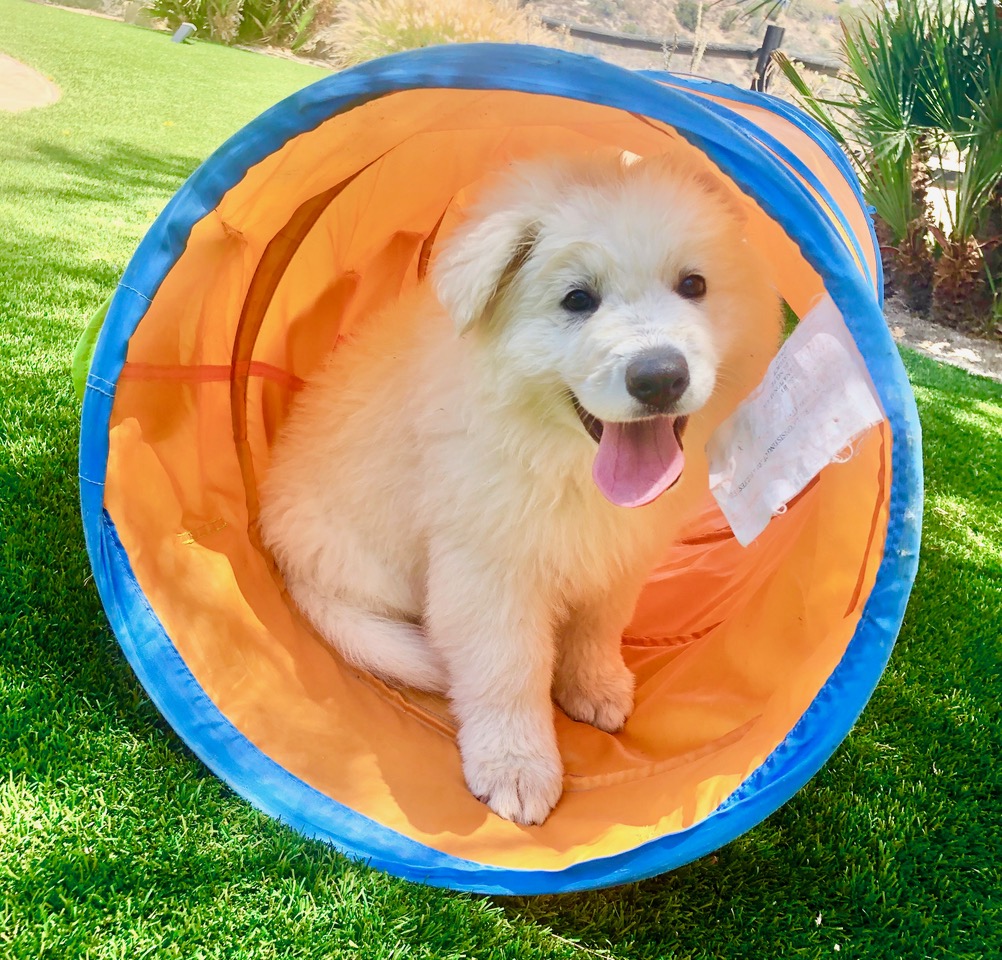
Introduced to ranch animals (horses, chickens, and more)
Begun with basic attention and focus exercises
The environment they grow up in during these weeks is as important as their genetics.
7–8 Weeks: Temperament Testing and Placement
At seven weeks, we conduct formal temperament and disposition testing on every puppy in the litter. This assessment is modeled on the Volhard Puppy Aptitude Test, evaluating confidence, trainability, energy level, touch sensitivity, problem-solving, and social drive. The results allow us to match each puppy to the family or role for which they are best suited.
Puppies from DWWR are not assigned randomly. They are matched deliberately based on what we have learned about each puppy and what each family has told us they need.
8–12 Weeks: Puppy Academy (Optional)
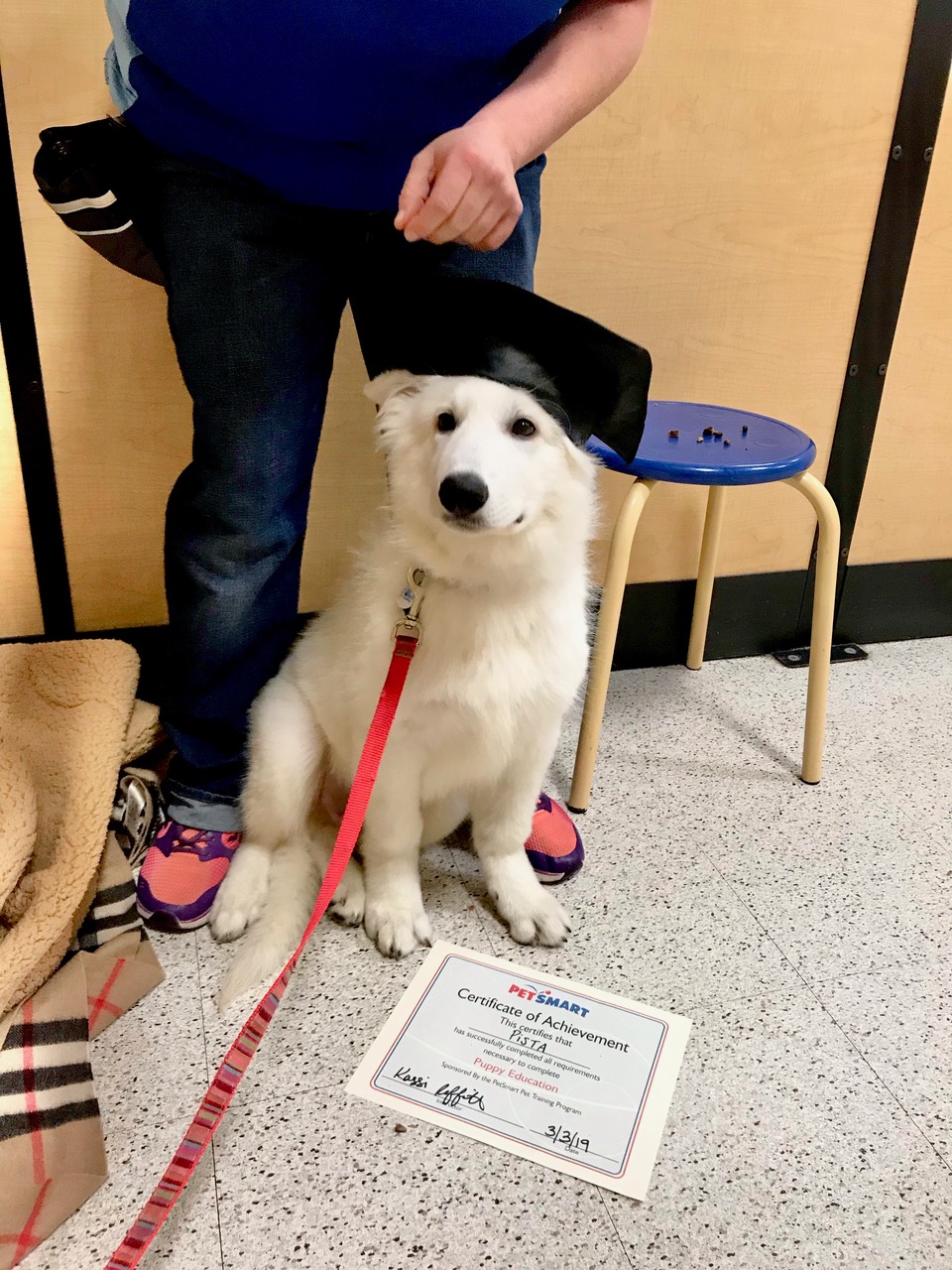
Families who choose our Puppy Academy program have their puppy remain with us through 12 weeks for structured daily training and continued socialization.
8 Weeks to 6 Months: Your Role at Home
Once your puppy arrives home, you become the primary driver of their development. This is a critical window, and the work you put in here shapes the next decade of your dog’s life.
Priorities during this period:
Continue socialization actively, new people, places, sounds, and situations weekly
Crate training is highly recommended for this breed. Dogs are den animals and feel most comfortable and confident once a crate routine is established
Begin structured daily training sessions (5–10 minutes, 2–3 times per day)
Establish consistent routines — feeding, sleeping, play, and quiet time
Introduce your puppy to any environments they will live and work in as adults
Begin basic manners: leash walking, greeting people calmly
6–18 Months: Adolescence
Adolescence in White Swiss Shepherds typically begins around 6–8 months and continues through 18 months. This is the period when many families feel like their beautifully trained puppy is testing boundaries, and it is a perfectly normal developmental phase.
Patience, consistency, and continued training are the answer. The foundation you built in the early months remains. Do not give up, simply hold your expectations and keep working.
What DWWR Dogs Grow Into
Our alumni are a measure of what this development program produces. DWWR dogs have gone on to work as:
Service and psychiatric service dogs
Therapy dogs in schools, hospitals, and elder care facilities
AKC agility, dock diving, and herding competitors
UKC conformation champions (including Best in Show and Reserve Best in Show)
Beloved family companions are reliably trained for off-leash work
Frequently Asked Questions
At what age does a White Swiss Shepherd calm down?
Most White Swiss Shepherds reach their adult temperament between 2 and 3 years of age. Adolescence (6–18 months) can be a more energetic and testing period — but with consistent training, they settle beautifully.
What is Early Neurological Stimulation, and does it really work?
ENS is a structured protocol, originally developed for military working dog programs, that stimulates the nervous system from birth through 16 days of age. Research confirms it produces measurable improvements in stress resilience, cardiovascular performance, immune function, and adaptability. DWWR applies ENS to every litter.
When can White Swiss Shepherd puppies leave their mother?
We place puppies at 8 weeks, the recommended minimum age. Puppies who stay for our Puppy Academy leave at 12 weeks with significantly more training and socialization.
How much exercise does a White Swiss Shepherd puppy need?
Puppies need less formal exercise than adults; excessive impact on developing joints should be avoided. Rich socialization and play are more appropriate than long runs during the first year.
Questions about bringing home your DWWR puppy? We offer complete onboarding support for every family. Contact us or reserve your puppy here.
The White Swiss Shepherd’s coat is one of the breed’s most striking features: that pure, luminous white is part of what makes people stop in their tracks. But it is also something that prospective owners often ask about.
Do they shed? Are they hard to keep clean? How often do they need bathing? Here is everything you need to know from breeders who have been living with and grooming these dogs for nearly 20 years.
Understanding the White Swiss Shepherd Coat
The White Swiss Shepherd comes in two coat varieties:
Short coat (stock coat): Dense, close-lying outer coat with a thick undercoat. The classic working dog coat, lower maintenance, sheds regularly but not dramatically.
Long coat: Longer outer coat that may be straight or slightly wavy, with a dense undercoat. More visually impressive, more brushing required, and a more pronounced shedding season.
Both coat types are double-coated, with an insulating undercoat beneath a protective outer coat, effective temperature regulation in both cold and warm climates, but a source of seasonal shedding.
Brushing
Frequency: At minimum, weekly brushing for short coats; 2–3 times per week for long coats. During shedding season (typically spring and fall), daily brushing is strongly recommended.
Recommended tools:
Slicker brush: excellent for surface brushing and removing loose hair
Undercoat rake / deshedding tool: essential for removing dead undercoat before it ends up on your furniture
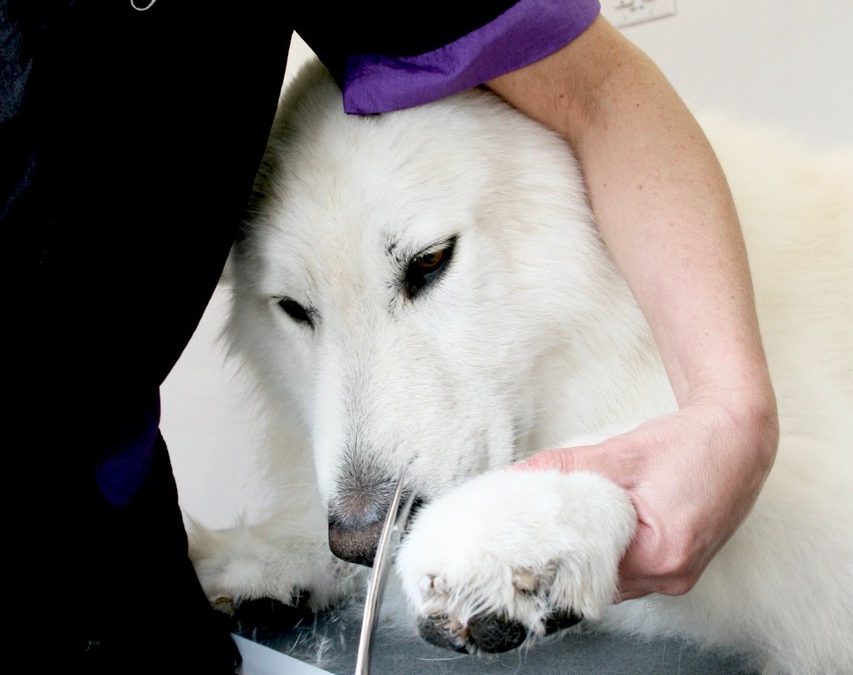
Brushing is also a bonding activity. Our puppies are introduced to gentle brushing from their earliest weeks. Most DWWR dogs genuinely enjoy grooming sessions by adulthood.
Bathing
White Swiss Shepherds are relatively clean dogs: they do not carry a strong odor and maintain their coat well with regular brushing. There is no set requirement for bathing. Our dogs at the ranch rarely get baths, but you may wish to give your dog one more often.
Tips for bathing a White Swiss Shepherd:
If for a show or special event: use a whitening or brightening shampoo designed for white-coated breeds to keep the coat brilliant. Otherwise, just use a gentler shampoo.
Rinse thoroughly: soap residue can cause skin irritation and dullness in the coat
Blow-dry after bathing to prevent moisture from sitting against the skin, particularly in long-coated dogs
Avoid bathing too frequently: it strips natural oils and can cause dry skin
Shedding: What to Expect
Let’s be honest: these dogs shed. All double-coated dogs do. You will notice moderate shedding throughout the year, with two heavier seasonal coat “blows”, usually spring and fall. During these periods, daily brushing and an undercoat tool dramatically reduce the amount of hair that ends up on your floors and furniture.
White dog hair is more visible on dark surfaces and less visible on light ones, something worth factoring into your furniture choices.
Coat, Ears, Nails, and Teeth
Ears: Check weekly for redness, odor, or discharge. Clean gently with a vet-approved ear solution. White Swiss Shepherds do not typically have persistent ear problems, but regular checks prevent issues from going unnoticed.
Nails: Trim when needed. Dogs that exercise frequently on hard surfaces may not need frequent trimming. Long nails affect gait and can cause joint stress over time. If you can hear them clicking on hard floors, they are too long. If in doubt, ask a groomer.
Teeth: Brush 2–3 times per week and/or have them chew on raw beef knuckle bones. Dental health is directly connected to systemic health. Do not neglect it.
Professional Grooming
For those using a professional groomer: be specific about the breed. Some groomers may attempt to shave or thin the double coat, which should be avoided; it disrupts temperature regulation and may prevent the coat from growing back correctly.
Frequently Asked Questions
Do White Swiss Shepherds shed a lot?
They shed moderately year-round and more heavily during two seasonal coat changes. Regular brushing, including an undercoat rake, manages shedding well for most households.
Is it hard to keep a white dog clean?
Not as hard as you might expect. White Swiss Shepherds have a naturally dirt-resistant outer coat that sheds debris well. Regular brushing and bathing as needed keep the coat looking exceptional.
Should I shave my White Swiss Shepherd in summer?
No! The double coat insulates against both heat and cold. Shaving exposes the skin to sunburn and can cause lasting coat damage. Regular brushing to remove dead undercoat is the correct approach for summer comfort.
See our grooming gallery for photos of DWWR dogs freshly groomed.
If you have been researching White Swiss Shepherds, you have probably encountered several names that seem to describe similar, or possibly identical, dogs. Berger Blanc Suisse. White Swiss Shepherd. White Shepherd. White German Shepherd.
The confusion is understandable. The history is genuinely intertwined. But the differences matter, particularly if you are considering a dog for your family, for service work, or for breeding.
Here is the clear breakdown, from someone who has been studying and breeding these dogs since before the Berger Blanc Suisse received official FCI recognition in 2002, and whose dogs are registered with both the FCI (Fédération Cynologique Internationale) and the UKC (United Kennel Club).
Quick Reference Comparison
White SwissShepherd/Berger Blanc Suisse
WhiteShepherd
White German Shepherd
German Shepherd
Origin
Switzerland
USA/Canada
Germany/USA
Germany
Coat
White only
White only
White only
Various (tan/black)
Registration
FCI
UKC
UKC / AKC
UKC / AKC
Rear Angulation
Natural/moderate
Variable
Often steep
Often steep
Temperament
Gentler, calmer
Variable
Variable
Variable
The German Shepherd
The German Shepherd Dog (GSD) is the well-known original, developed in Germany in the late 19th century as a herding and working dog. The original breed included white-coated individuals, as white coat genetics were present in early herding dog populations. Over time, white coats were excluded from GSD breed standards, wrongly blamed for color dilution, pushing white shepherds in a separate direction.
Wide range of temperament (from extremely high-drive working lines to calmer show lines)
Significant structural variation, modern German show lines often have very steep hindquarter angulation
Generally higher in drive and guarding instinct than the BBS
German Shepherds can come in a white color, however the white color is not allowed in the show ring
The White Shepherd
The White Shepherd is a breed recognized by the United Kennel Club (UKC) in the United States, descended from white-coated German Shepherds. While sharing ancestry, White Shepherds have been developed somewhat independently in North America. Temperament and structure vary depending on bloodlines.
The Berger Blanc Suisse (White Swiss Shepherd)
The Berger Blanc Suisse takes its divergent path from the white shepherd dogs that were imported to Switzerland and developed there independently over decades. Swiss breeders refined the breed with specific focus on temperament, structure, and health, resulting in a dog that received full FCI recognition as a distinct breed in 2002.
Key distinctions from the German Shepherd:
More moderate rear angulation, a more natural gait and less structural stress on joints over a lifetime
Gentler, calmer temperament, specifically selected for over generations
Pure white coat only, with dark pigmentation in eyes, nose, and nails
Slightly lighter and more elegant in build
World Champion show dogs and working dogs with IPO 3 and SchH3 titles across Europe confirm the quality of the breed’s modern development
At DWWR, our dogs are registered Berger Blanc Suisse from FCI-recognized European bloodlines or with the UKC in the United States or both. Pedigrees are available to clients upon request. DWWR is a member and listed breeder with both the American White Shepherd Association (AWSA) and the United White Shepherd Club, the two primary breed clubs in the United States.
Frequently Asked Questions
Is a White Swiss Shepherd (BBS) the same as a White German Shepherd?
No. While they share ancestry, the Berger Blanc Suisse is a distinct FCI-recognized breed developed in Switzerland. The BBS has been selectively developed for distinct temperament and structural differences, and is registered through the FCI (European registry) and UKC, not as a color variant of the German Shepherd.
Is the White Swiss Shepherd (BBS) the same as the White Shepherd?
They are related but distinct. The White Shepherd (UKC) was developed in North America from white-coated German Shepherd lines, while the BBS was developed in Switzerland and is FCI recognized. Breeding standards, structure, and temperament have diverged over decades.
Which breed is better for a family?
For most families, the Berger Blanc Suisse offers the most reliably gentle, calm temperament with the trainability of the shepherd family. Their natural aptitude for therapy and service work also makes them exceptional with children, the elderly, and individuals with special needs.
Want to experience the Berger Blanc Suisse difference firsthand? View our current available puppies or contact us to learn about upcoming litters.
After nearly two decades of breeding elite White Swiss Shepherds and with a background in biology and genetics, I have strong opinions about what these dogs should and should not eat.
The short version: food quality is not an area to cut corners, and dogs are not designed to eat what is cheapest or most convenient.
Our Feeding Philosophy at DWWR
Our dogs are fed a combination of the highest-quality premium kibble and a variety of raw proteins, bones, and whole-food additions. This is not a trend; it reflects what we know about canine biology and what we have observed over years of watching dogs thrive.
What We Feed at DWWR
Salmon-based premium kibble: grain-free with no wheat or low-quality fillers. Salmon is ideal for White Swiss Shepherds: highly digestible, rich in omega-3 fatty acids that support coat health and cognitive function, and less likely to trigger sensitivities. There are other high-quality meat sources such as venison, rabbit, or lamb. Please ask us if you have any questions.
Raw organic eggs: pasture-raised from local chickens. Eggs are among the most bioavailable protein sources and support coat, muscle, and overall condition.
Organic kefir: a fermented dairy product rich in probiotics. Gut health is foundational to immune function, and kefir is one of the most effective natural ways to support it.
Raw meaty bones: for dental health, jaw strength, and mental stimulation.
What to Avoid
Not all premium-looking food is premium. Things to avoid in a White Swiss Shepherd’s diet:
Corn, wheat, and soy: common fillers that contribute to inflammation, coat issues, and digestive sensitivity
Artificial preservatives (BHA, BHT, ethoxyquin): linked to long-term health concerns
“By-products” as a primary protein source
Excessive carbohydrate loading: Dogs are primarily protein and fat metabolizers
Feeding Through Life Stages
Puppies (8–12 months): Growing White Swiss Shepherds need higher protein and controlled calcium-to-phosphorus ratios to support skeletal development without accelerating growth too rapidly. Large-breed puppy formulas or appropriate raw feeding protocols are recommended.
Adults (1–7 years): Maintenance feeding with high protein, moderate fat, and low carbohydrate content. Body condition score should be monitored; you should be able to feel (but not see) ribs easily.
Seniors (7+ years): Many older dogs benefit from slightly reduced calories, increased joint-supporting supplements, and continued high-quality protein to maintain muscle mass.
Supplements We Recommend
Based on our experience with this breed across nearly two decades:
Omega-3 fish oil: supports coat quality, joint health, and cognitive function
Probiotics: particularly important after illness or antibiotic treatment
Joint support (glucosamine/chondroitin): we begin discussing this with families as dogs approach their senior years
Frequently Asked Questions
What is the best food for a White Swiss Shepherd?
We recommend a high-quality kibble as the foundation, supplemented with raw proteins (especially organ meats), organic eggs, kefir, and raw bones. Avoid foods with corn, wheat, soy, or artificial preservatives.
Can White Swiss Shepherds eat raw food?
Yes. When properly formulated, a raw diet is excellent for White Swiss Shepherds. It is important to maintain a balanced diet. We recommend consulting with a canine nutritionist if you are transitioning to full raw feeding.
How much should I feed my White Swiss Shepherd?
Feeding amounts depend on age, activity level, and the specific food. Use the manufacturer’s guidelines as a starting point, then adjust based on body condition. Most adult White Swiss Shepherds do well on 2–4 cups of quality kibble per day, once a day.
Questions about feeding your DWWR puppy? We are happy to share the exact protocol we use and provide guidance on transitioning at home. Contact us here.
The White Swiss Shepherd is one of the most trainable breeds in the world. This is baked into its biology. With a herding background, high intelligence, and an exceptional ability to read and respond to human cues, the White Swiss Shepherd takes to training like few other breeds.
But trainability is a tool. The outcome depends entirely on what you do with it and when you start.
It Starts Before Birth: Early Neurological Stimulation (ENS)
At DWWR, training does not begin at eight weeks. It begins on day three of life.
From birth through 16 days, every puppy in our program undergoes Early Neurological Stimulation (ENS), a protocol originally developed for US military working dog programs and validated by decades of research on neurological development in dogs. ENS exercises involve brief, carefully controlled stimulation: mild thermal exposure, positional changes, and tactile stimulation that activate the neurological system during a window when it is uniquely plastic.
The measurable results of ENS include improved stress resilience, stronger cardiovascular response under pressure, stronger immune function, and enhanced adaptability to novel environments. In practical terms, our puppies are calmer, more confident, and more responsive from the beginning. This foundation makes everything that follows, including advanced training, dramatically more effective.
The DWWR Puppy Academy
Families who choose our Puppy Academy program have their puppy remain with us through 12 weeks for structured, daily training and continued socialization. The best socialization window for dogs is between 5 weeks and 16 weeks of age. What a puppy experiences and how, during this period, shapes their relationship with the world for the rest of their life. another round of puppy shots and dewormings while wi
For more information about Puppy Academy, please see our website “Puppy Academy”.
Core Training Principles for White Swiss Shepherds
1. Positive, Reward-Based Methods: The BBS is a sensitive breed. Harsh corrections or punishment-based methods with puppies are counterproductive; they undermine trust and can lead to shut-down behavior. This breed responds beautifully to clear, positive reinforcement and gentle, consistent correction. Praise, play, and food rewards work exceptionally well.
2. Mental Stimulation Is Not Optional: An under-stimulated White Swiss Shepherd will find their own entertainment. These dogs need to think. Puzzle feeders, training sessions, scent work, and interactive play are an important part of the daily routine.
3. Consistency From Day One: These dogs learn fast, which means they learn the rules you set and the rules you forget to set. Clear, consistent expectations established early and maintained consistently pay dividends throughout the dog’s lifetime.
4. Socialization Is Training: Exposure to people, places, sounds, and situations is the most important training a young BBS can receive. Safe, careful exposure during the socialization window matters more than any command your dog will ever learn.
What White Swiss Shepherds Can Learn
The ceiling on BBS training is extraordinarily high. The evidence is in what our dogs actually do:
Service dogs performing complex, multi-step task sequences for people with disabilities
Therapy dogs in clinical, school, and elder care settings
AKC agility, dock diving, and herding competitors
Dogs with Schutzhund 3 (SchH3) and IPO 3 titles in their bloodlines: some of the most demanding protection and obedience titles available
Family companions who are reliably off-leash in any environment
If you put in the work, this breed will meet you at the highest level.
Frequently Asked Questions
Are White Swiss Shepherds easy to train?
Yes — they are one of the most trainable breeds available. Their combination of intelligence, focus, and desire to please makes them highly responsive to consistent, positive training methods.
When should I start training my White Swiss Shepherd puppy?
At DWWR, training starts at day three of life with ENS. For families, training begins from the day your puppy comes home: ideally around 8 weeks (or at 12 weeks after Puppy Academy). The earlier you establish clear expectations and rich socialization, the better.
Can White Swiss Shepherds do off-leash work?
Yes, with proper training. Their trainability and strong human bond make reliable off-leash recall very achievable. This is an area where investing in professional guidance early pays off enormously.
Questions about training your DWWR puppy? Contact us — we offer lifelong support to every family in our program.
In nearly two decades of breeding White Swiss Shepherd, the question I am asked most often is this: What are they really like to live with?
The honest answer is that the White Swiss Shepherd is unlike any other breed I have encountered, and I say this as someone with a degree in biology, genetics, and animal behavior from UCLA, who has worked with dogs professionally for most of my adult life. They are not simply a pretty German Shepherd. They are a distinct breed with a temperament that, in many ways, is more refined, more emotionally present, and more attuned to human life than that of their herding breed cousins.
Core Temperament Traits
Intelligence
The White Swiss Shepherd is a highly intelligent dog, and not merely in the “learns commands” sense. These dogs are perceptive. They read their environment, anticipate, and problem-solve. This is what makes them exceptional at service and therapy work, agility, and herding. It is also what makes them fantastic pets: a dog who watches, understands, cares, and responds.
Loyalty Without Anxiety
White Swiss Shepherds form deep bonds with their families. They want to be near the people they love. Because of their strong bond with their owner, it’s essential to crate-train them and gradually teach them independence from an early age, ensuring they remain confident and calm when left alone. A well-bred, well-socialized BBS will follow you through life with calm devotion.
Gentle But Capable
This is the most important distinction from the German Shepherd: the White Swiss Shepherd is softer. Not weak: capable, athletic, loyal, and social, but genuinely gentler in their daily disposition. They are not prone to aggression or excessive resource guarding. This makes them ideal for families with children and for service and therapy contexts.
Playful and Engaged
These dogs do not simply exist alongside you; they engage with you. They want to play, to work, to learn, to be part of what you are doing. This versatility shows in competition: DWWR dogs have participated in AKC agility, dock diving, and herding events, activities that demand focus, drive, and the ability to work as a team with their handler.
How We Assess Temperament at DWWR
Good temperament is not left to chance. From birth through 16 days, our puppies undergo Early Neurological Stimulation (ENS), a structured protocol used in military working dog programs that builds stress resilience and neurological robustness during a critical developmental window. This lays the foundation for the confident, adaptable temperament the BBS is known for.
At seven weeks, we conduct formal disposition testing on every puppy, modeled on the Volhard Puppy Aptitude Test. This assessment evaluates confidence, trainability, energy level, touch sensitivity, social drives, and environmental stability. The results guide our placement recommendations: matching each puppy to the family or working role they are best suited for. We do not assign puppies randomly.
White Swiss Shepherd With Children
White Swiss Shepherds are exceptional with children, including very young ones. Their natural gentleness means they do not knock children over, do not become overstimulated, and tend to be instinctively careful around small or vulnerable people.
This is not universal; it depends on the bloodline, the early socialization, and the individual dog. Our program selects specifically for family-friendly temperament..
White Swiss Shepherd With Other Animals
The BBS is not a high-prey-drive breed. They generally coexist well with cats, other dogs, and even smaller animals when properly introduced. At DWWR, our dogs are raised alongside our ranch animals, horses, chickens, and more, so our puppies are naturally habituated to a multi-species environment from their earliest days.
The Difference Good Breeding Makes
Temperament is not guaranteed by breed alone. It is the product of genetic selection across many generations, careful early socialization, and appropriate puppy development. We have spent nearly 20 years studying the genetics behind it, selecting for the specific temperament traits that make a White Swiss Shepherd a genuine partner for life.
DWWR is a listed breeder with the American White Shepherd Association (AWSA) and the United White Shepherd Club. Our breeding dogs are registered with the FCI and/or UKC, and pedigrees are available to clients upon request. This framework of accountability supports the consistency of temperament you will see across our program.
Frequently Asked Questions
Are White Swiss Shepherds aggressive?
No. The White Swiss Shepherd has a notably gentle, non-aggressive temperament. While they are alert and attentive, they are not prone to reactive behavior, guarding, or aggression. This distinguishes them from many other working breeds.
Are White Swiss Shepherds good for first-time dog owners?
Yes, particularly with proper puppy support. Their trainability and affectionate nature make them accessible for committed first-time owners. We provide lifelong support to all our DWWR families, which helps new owners navigate any challenges.
Do White Swiss Shepherds have separation anxiety?
They are deeply bonded dogs and prefer company, but a properly socialized BBS from quality lines handles normal alone time well.
Ready to experience this temperament for yourself? View our available puppies or contact us to discuss what you are looking for.